

Linear lighting
Continuous lines of light
A continuous line is not achieved by repeating luminaires: it is achieved by resolving the junctions, the power supply and the rhythm of the room.
The starting point
Continuity shows at the ends.
A line that stops halfway across the room is no longer a line. Length, junctions and the way each run ends matter as much as the distribution of light.
- Route
- Junctions
- Rhythm
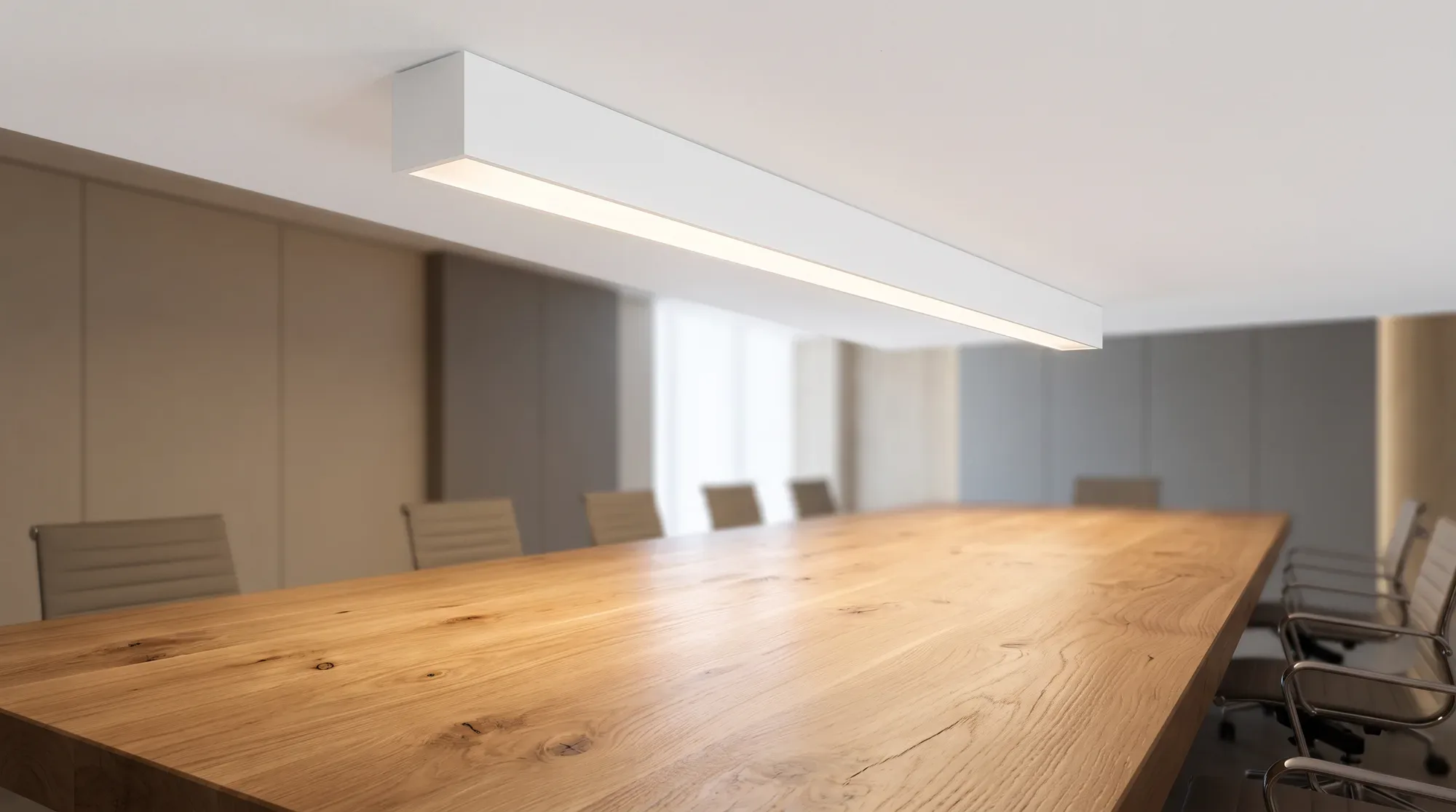
What a continuous line resolves
A continuous line orders a long space: a corridor, a worktable, the axis of a room. By running from end to end, light stops being a sum of points and reads as a single piece.
On ceilings and walls, the line can also mark a direction or separate two areas without raising partitions. That reading is decided before choosing the luminaire.
What the project decides
The total length, the power points and the junctions with beams, columns or services condition the solution. So do the height at which the line should sit and what lies beneath it.
A suspended line reveals its route and asks for a considered composition; one integrated into the ceiling disappears and changes the visual weight of the room. The decision is made with the section of the space in front of you.
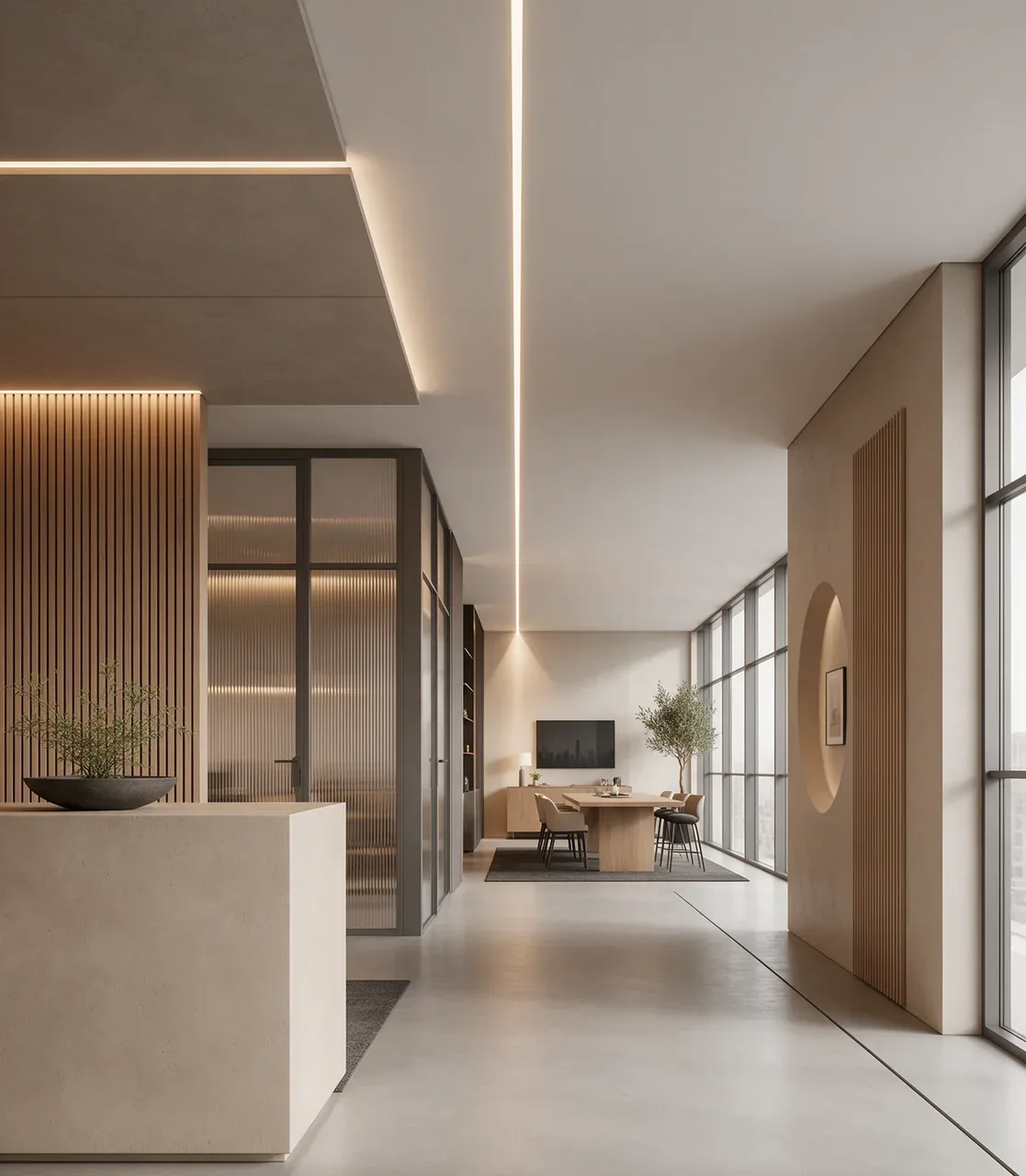
Continuity is perceived when light follows the use of the room without interruption.
How it is approached
The work starts from the plans, the clear height and the uses of each area. That defines the route and identifies the points where the line cannot pass or needs a special junction.
Alternatives for length, suspension and integration are then compared and reviewed with the project team before the solution is closed.
What to avoid
- Splitting the line into runs that do not read as one, leaving the ends without criteria and forgetting the power supply at the planning stage.
- It is also worth avoiding a line that lights the ceiling and not the table: continuity is judged by what happens below.
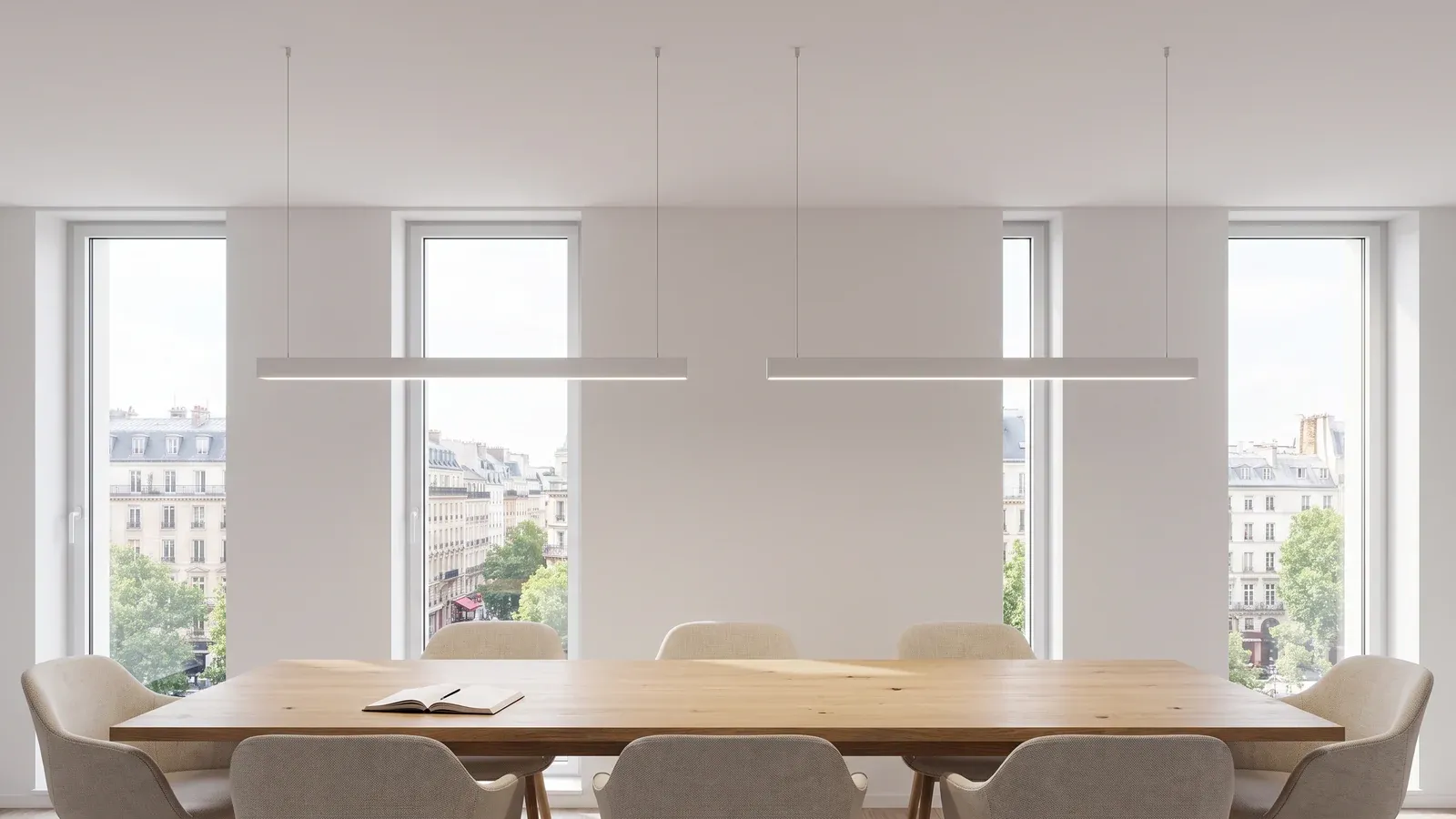
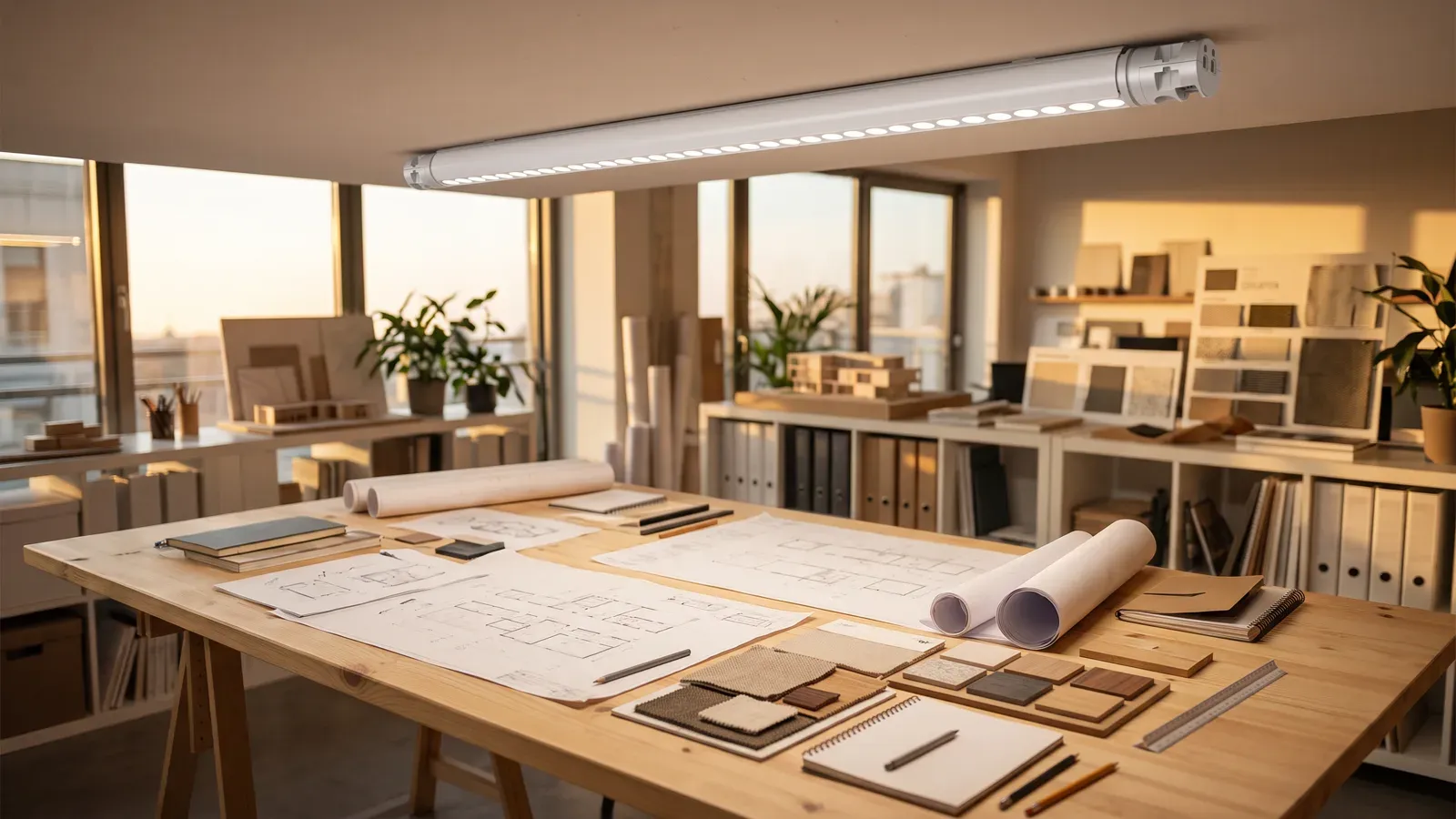
Lines for every scale.
Real Conalux catalogue pages. The choice is defined with the project's technical team.
Support for your lighting project.
Lighting advice, lighting studies and customised projects to inform lighting choices based on the architecture and intended uses.
Lighting advice
Discuss the lighting intentions and needs of your project.
Lighting studies
Develop the lighting approach in relation to the architecture and its uses.
Customised projects
Explore a response shaped around the context and direction of your project.
Frequently asked questions
How long can a continuous line be?
It depends on the solution, the power supply and how the junctions are resolved. The length is defined with the technical team from the real space.
Should it be suspended or integrated into the ceiling?
Suspending it gives presence and reveals the route; integrating it makes it disappear into the plane. The choice depends on height, use and the effect sought.
What information should be gathered to start?
The plans, the clear height, the uses of each area and the obstacles in the ceiling. If an installation exists, its power points as well.
Draw the whole route
Conalux brings together the solutions and advice to plan your continuous line of light.