

Linear lighting
Linear lighting systems
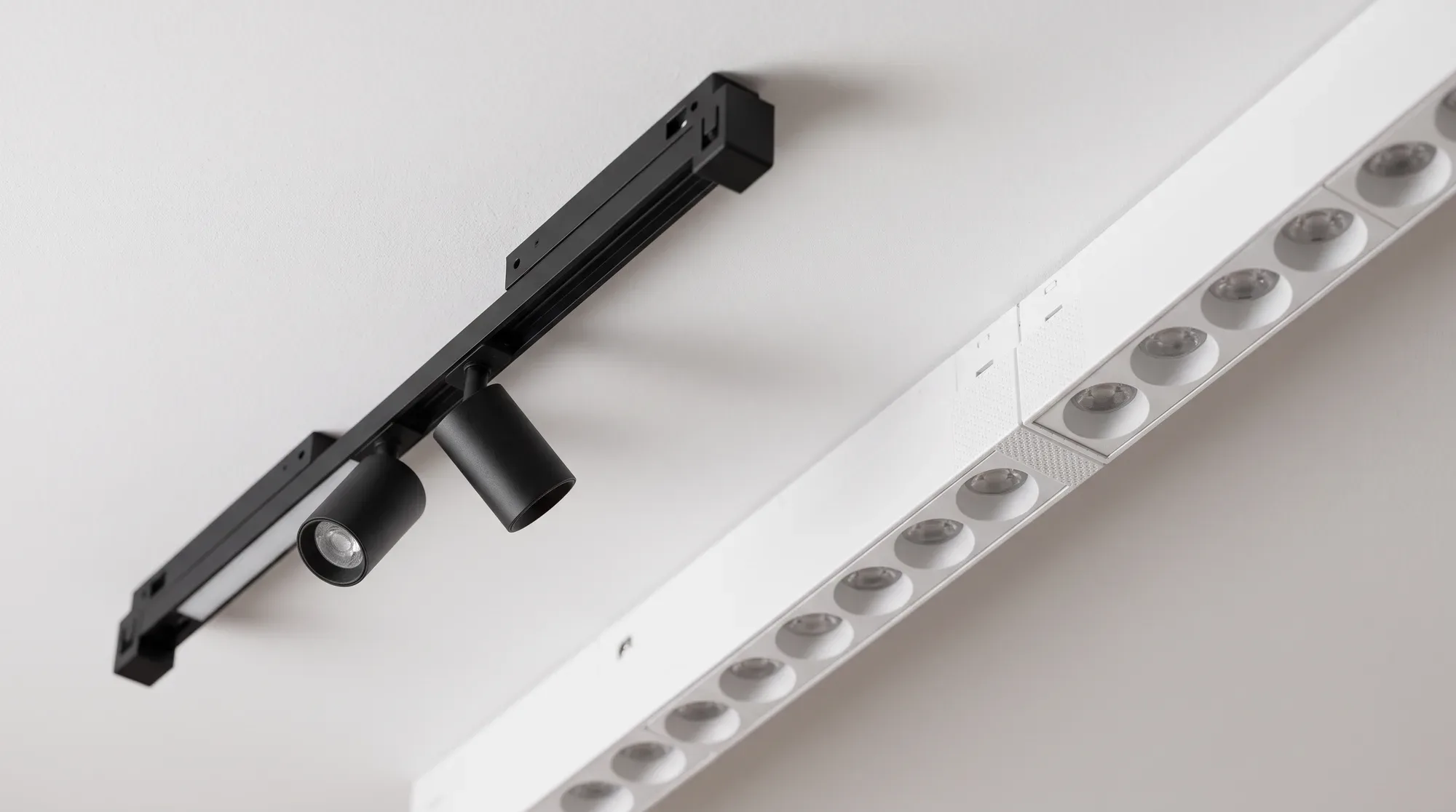
A linear system works when light has to be distributed and adapted at the same time: track, module and spotlight share the same axis.
The starting point
Compose without rebuilding.
A track lets you change the light without opening the ceiling. That flexibility makes sense when a space changes use, display or layout.
- Track
- Modules
- Flexibility
What a linear system resolves
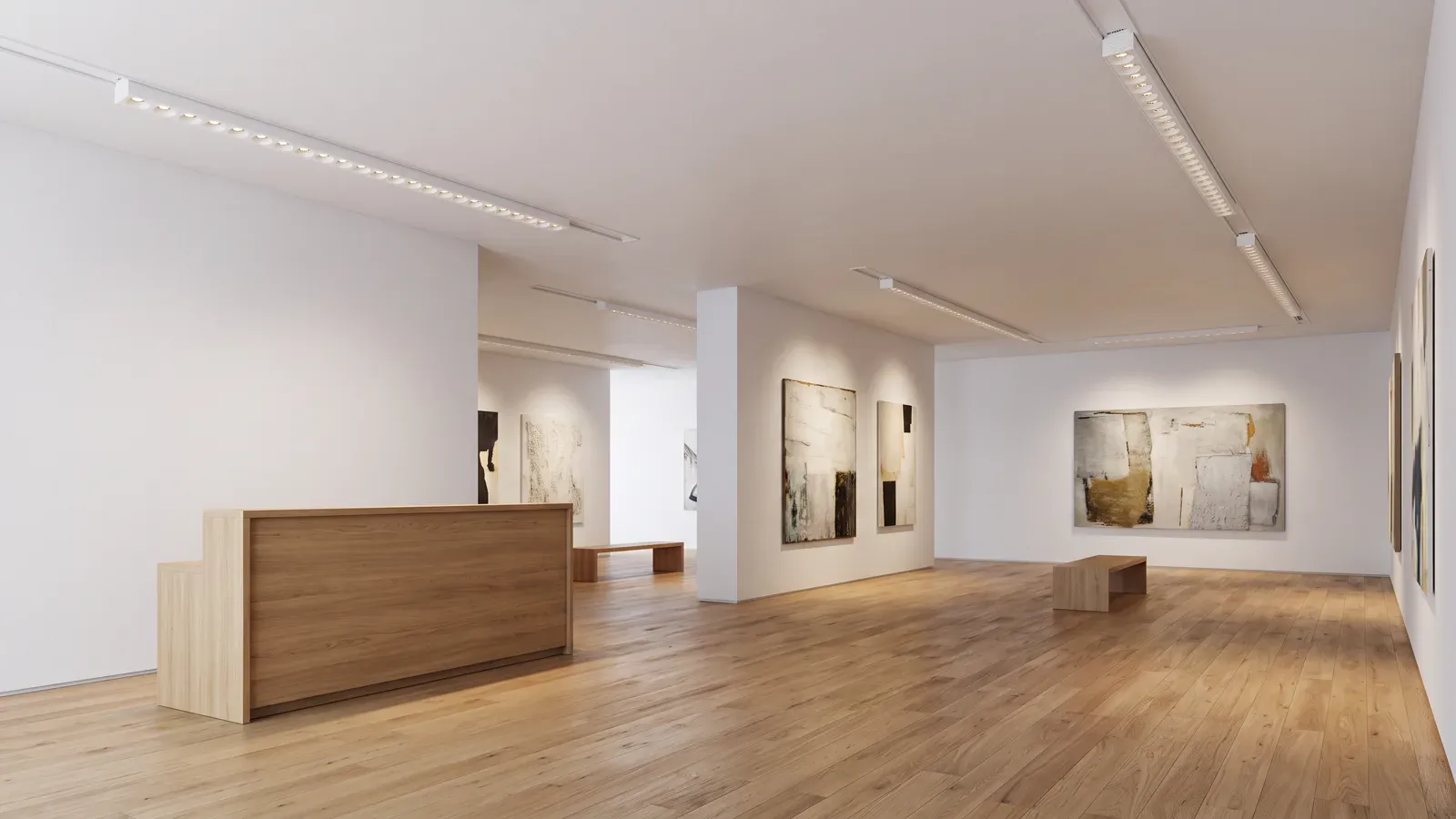
The system brings general and accent light onto the same axis. Linear modules distribute across the room; spotlights point at what changes: an artwork, a product, a counter.
In spaces that are reorganised, the track avoids rethinking the ceiling every time the layout changes. Light moves with use.
What the project decides
The ceiling grid, the height and the power points define the track layout. So does the amount of general light needed and which elements must be repositionable.
The choice between a recessed, surface or suspended track changes the visual presence of the system and the room to intervene later.
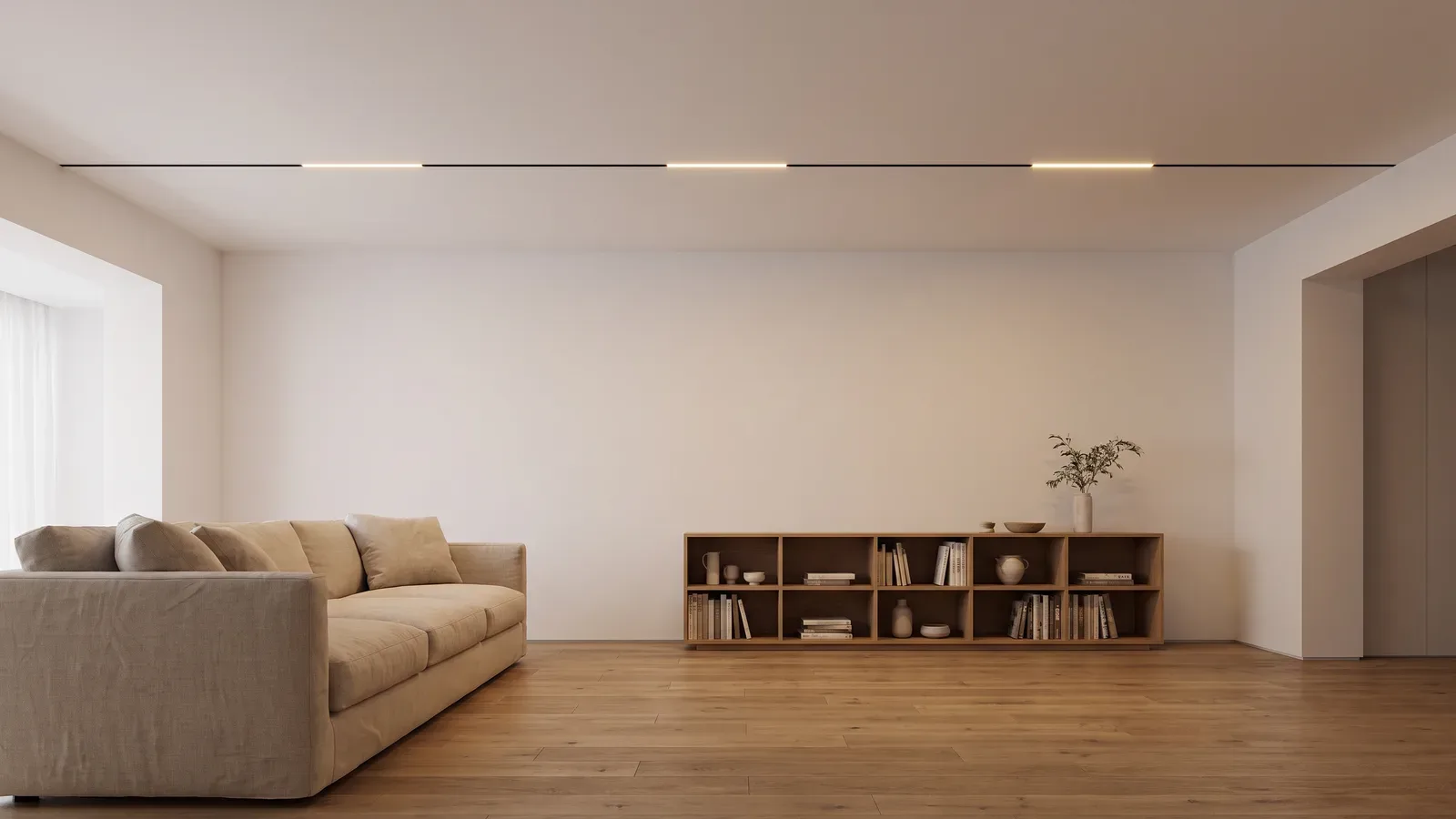
The track orders the room and leaves space to change what is lit without touching the installation.
How it is approached
The work starts from the plans, the intended uses and what already exists in the ceiling. That draws the grid and identifies the points where the track cannot pass.
Modules and spotlights are then combined on that grid and the solution is reviewed with the project team, including how each piece is accessed.
What to avoid
- Filling the track with pieces without a composition criterion, forgetting the power supply and choosing the system for the first display only.
- A system that cannot be maintained or repositioned loses the advantage that justifies it.
Tracks and modules from the catalogue.
Real Conalux catalogue pages. The choice is defined with the project's technical team.
Support for your lighting project.
Lighting advice, lighting studies and customised projects to inform lighting choices based on the architecture and intended uses.
Lighting advice
Discuss the lighting intentions and needs of your project.
Lighting studies
Develop the lighting approach in relation to the architecture and its uses.
Customised projects
Explore a response shaped around the context and direction of your project.
Frequently asked questions
What is the difference between a magnetic track and a conventional one?
A magnetic track makes it easier to place and reposition modules and spotlights. The specific solution depends on the system and the elements to be combined.
Can it be installed in an existing ceiling?
It depends on the type of ceiling, the available space and the power points. It is reviewed before defining the layout.
What information should be gathered to start?
The plans, the height, the uses of each area, what must be able to change and the constraints of the ceiling.
Order the light in the room
Conalux brings together the systems and advice to compose your project on a single axis.