

Linear lighting
Professional LED strip
LED strip resolves what a rigid luminaire cannot follow: a curve, a counter, the edge of a ceiling or the route of a bar.
The starting point
Follow the form, do not force it.
A well-resolved strip follows the geometry of the venue. A badly resolved one looks added on: visible cuts, shadows at the curves and ends that do not close.
- Curves
- Routes
- End details
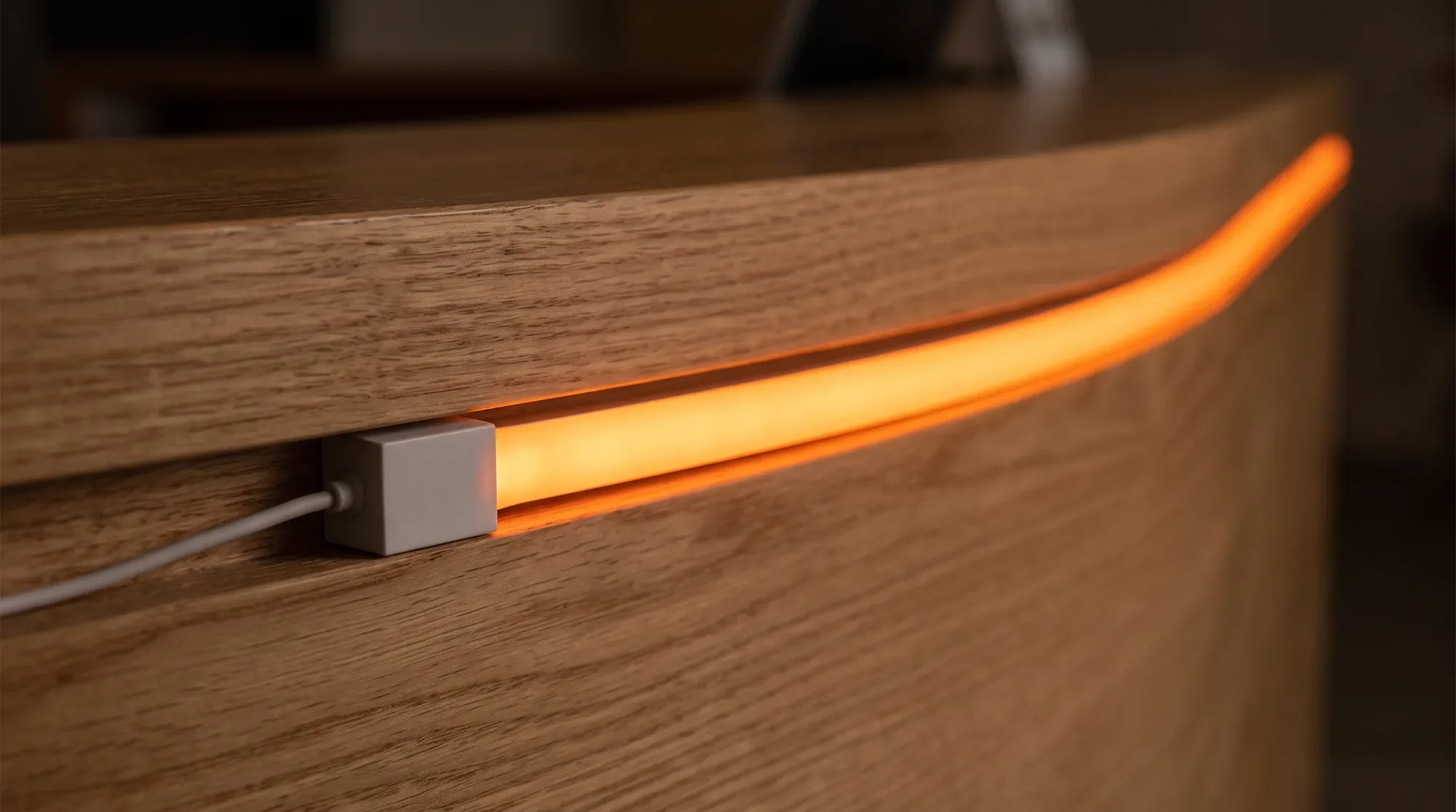
What LED strip resolves
Strip and flexible neon carry light where the project needs it: the edge of a bar, the perimeter of a ceiling, a curved wall or a counter that cannot take a straight luminaire.
They also resolve indirect light: a bounce on a surface can set the mood without the source being visible. That decision changes how the venue reads entirely.
What the project decides
The support, the fixing method and maintenance access set the rules. A tight curve, a change of plane or a long run ask for different solutions and an end detail designed for each extremity.
The distance to the receiving surface also defines the result. A visible strip is not the same as one hidden in a profile or behind an edge.
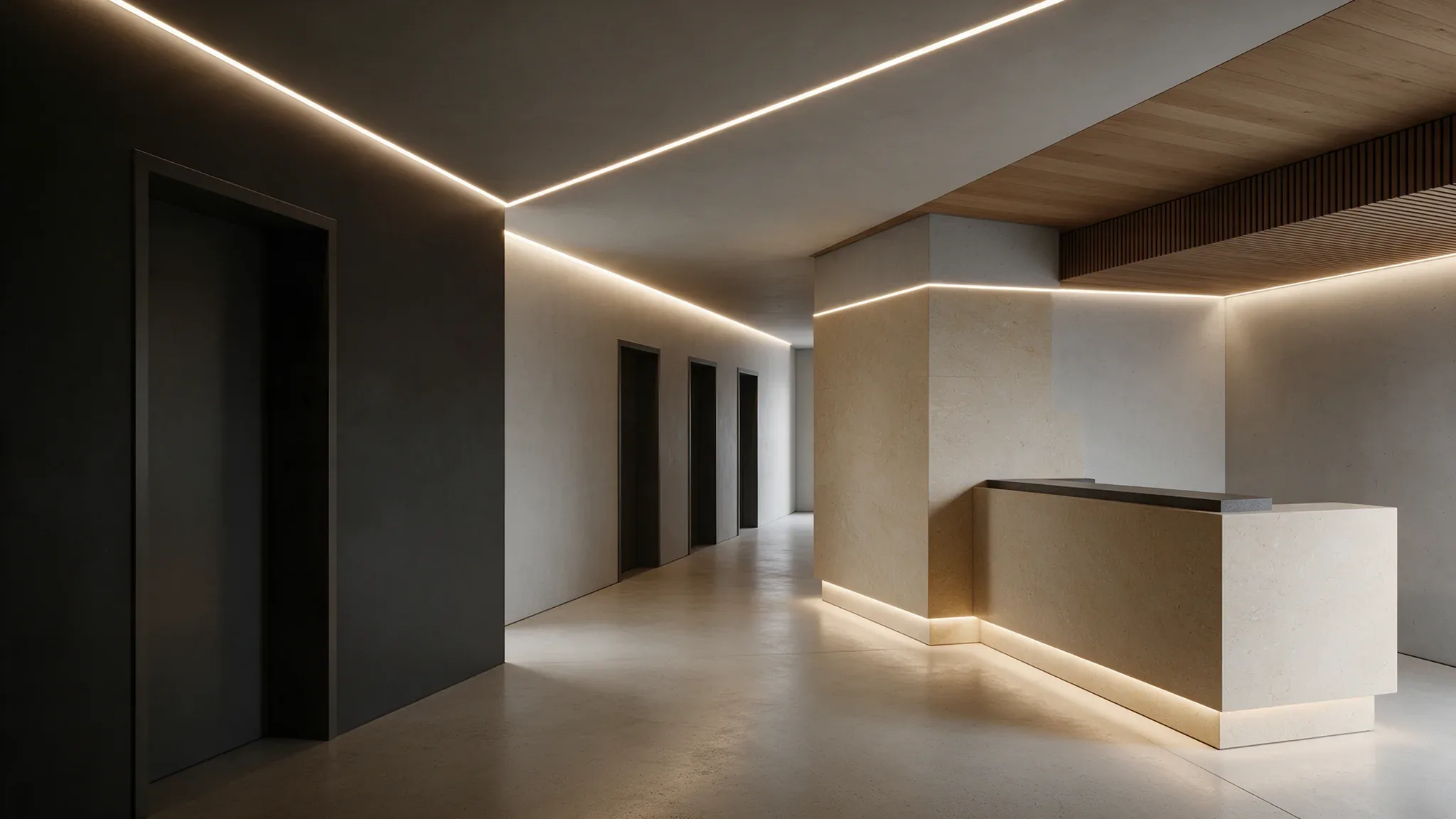
A strip is judged by how it follows the form and by what is seen when the venue is at half light.
How it is approached
The work starts from the drawing of the venue, its sections and the points where the strip must turn or end. That identifies the junctions that need a special piece.
Alternatives are compared for visual continuity and for what they demand on site. The solution is closed with the project team before ordering material.
What to avoid
- Improvising cuts on site, leaving the ends without a detail and choosing the strip only by the colour of the light.
- A badly resolved curve is visible even with the light on. The detail matters as much as the effect.
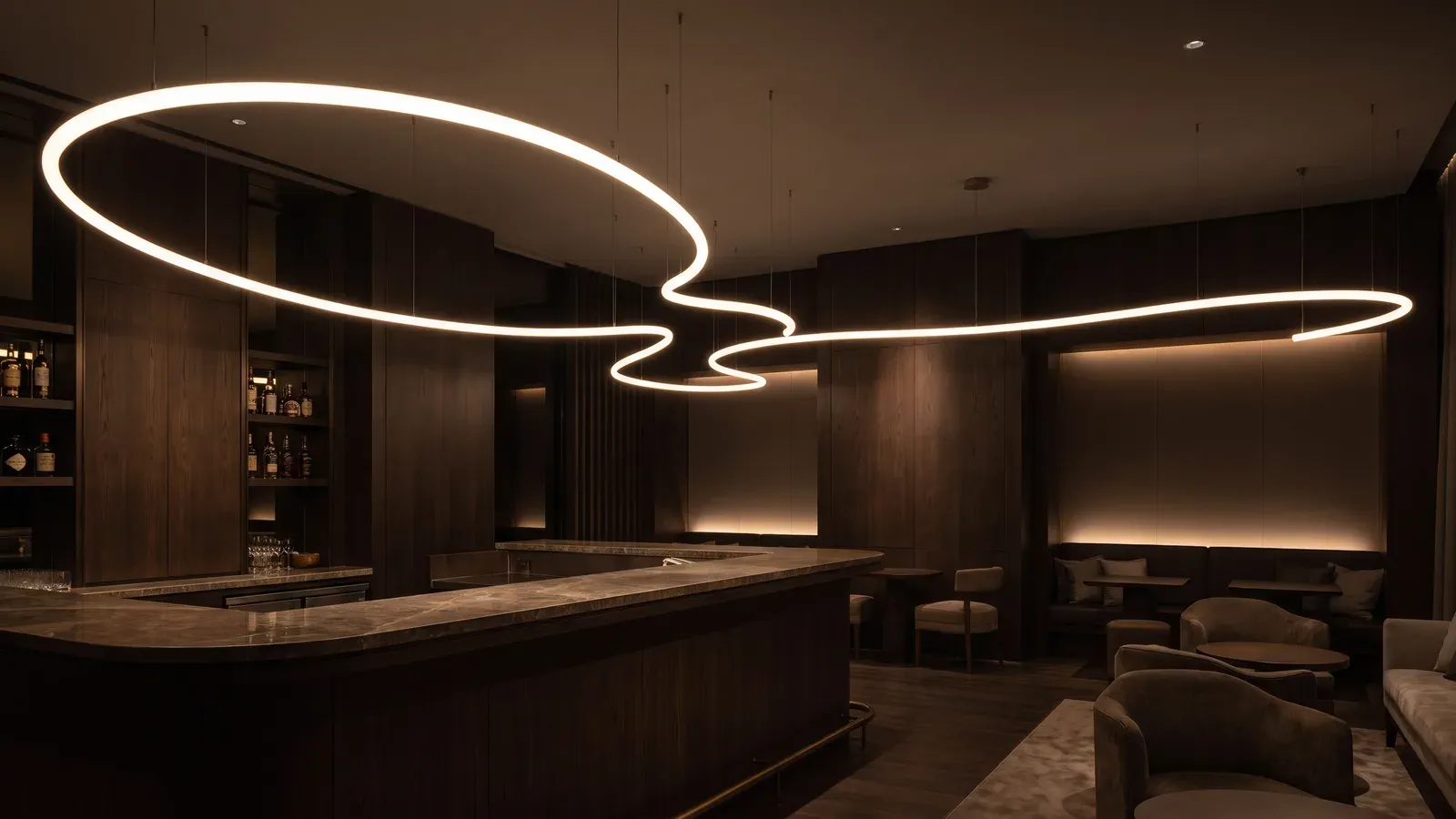
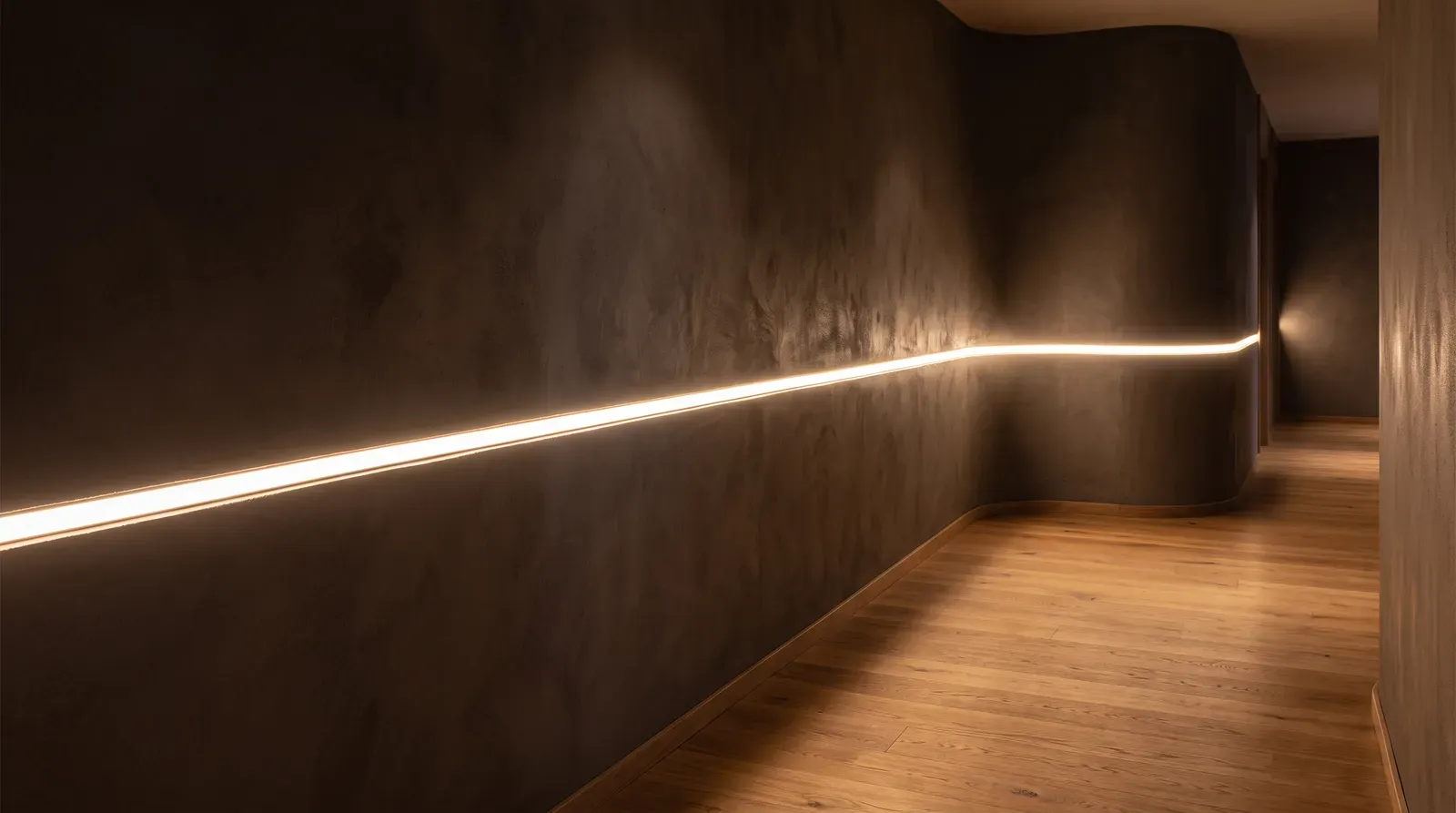
Strips and lines from the catalogue.
Real Conalux catalogue pages. The choice is defined with the project's technical team.
Support for your lighting project.
Lighting advice, lighting studies and customised projects to inform lighting choices based on the architecture and intended uses.
Lighting advice
Discuss the lighting intentions and needs of your project.
Lighting studies
Develop the lighting approach in relation to the architecture and its uses.
Customised projects
Explore a response shaped around the context and direction of your project.
Frequently asked questions
What is the difference between LED strip and flexible neon?
Both allow continuous runs, but they behave differently at curves, end details and visual presence. The choice depends on the form and the effect sought.
Can it be installed on an existing bar or counter?
It depends on the support, the available space and how access is resolved. It is reviewed against the sections of the element before proposing a solution.
What information should be gathered to start?
The drawing of the venue, the sections of the elements to be followed, the power points and the effect you are looking for.
Take light to the edge
Conalux brings together the strips, profiles and advice to resolve your run of light.